
When people think about financial risk, they are usually picturing market volatility. They worry about a concentrated stock position that tanks, a tech crash that wipes out two years of gains, or a broad downturn that hits right before retirement.
We spend decades building defenses against that kind of risk. We diversify, we rebalance, or we set a cash buffer to take us through a big draw down. But the financial risks that do the most damage in retirement aren’t always market risks at all. The risks can be more unexpected, like choosing the wrong advisor, identity theft, or a slow erosion in the judgment you need to spot a bad actor before it’s too late.
Early in your investing life, playing defense mostly means avoiding high-fee products and unnecessary complexity. As you age, possible threats can come from many more places, and playing defense stops being about protecting your growth and starts being about protecting you assets from expensive mistakes, drag from unnecessary fees, and from outright thieves.
How Financial Vulnerability Changes as You Age
Cognitive decline doesn’t usually show up as a single bad day. It’s a gradual erosion of financial judgment that starts years before anyone, including you, notices a pattern. Analytical decision-making and financial literacy tend to peak in your mid-50s and decline slowly after that. The problem is that confidence doesn’t decline on the same schedule. Most people feel just as capable of evaluating a complex tax strategy or spotting a scam at 75 as they did at 45.
That gap between actual capability and self-perception is exactly where predators, bad advisors, and identity thieves operate.
The Oversights and Scams That Do the Real Damage
Financial loss in retirement rarely looks like a single dramatic theft or bad decision. More often it’s a series of small structural vulnerabilities or a chain of bad decisions.
The “too good to be true” trap.
Bernie Madoff ran his scheme for decades and fooled people who were smarter and more experienced than most of us. Modern versions show up as private debt deals or offshore crypto plays promising steady returns with no correlation to the market. As people age, the desire for safety and yield creates a specific vulnerability, and fraudsters know it. A pitch for guaranteed 10% returns with zero downside should trip an alarm every time. Risk and reward don’t decouple just because someone found a “new strategy.”
Trusting the wrong people
As managing a portfolio gets more taxing, sometimes the urge to hand off that responsibility grows. But handing the keys to an AUM advisor late in life can eat a huge share of your lifestyle budget right when healthcare and long-term care costs start climbing. Worse, some advisors will pitch opaque, high-fee annuities or complicated life insurance products dressed up as “estate planning.”
Identity theft and account takeovers.
For a retiree, identity theft usually isn’t always a simple stolen credit card number. It can be a full account takeover. Scammers impersonate the IRS, Medicare, or a brokerage’s security team to get remote access to your computer or your multi-factor-authentication (MFA) codes. Once thieves get in they systematically drain accounts.
ACAT exploitation
This one gets overlooked constantly. The Automated Customer Account Transfer (ACAT) system exists to make moving investments between brokerages fast. But it’s a “pull” request initiated by the receiving firm, which means a scammer who has your account number can open a fraudulent account elsewhere and pull your assets before you know anything happened.
The Risk of a Single Financial Driver in the Household
In most DIY households, one spouse runs the whole show. They build the spreadsheets, handle the rebalancing, manage the tax-efficient withdrawals, and know every login by heart. That division of responsibilities works fine until it doesn’t. If that one key spouse becomes incapacitated or dies, the survivor is left navigating a maze of accounts during the worst possible moment emotionally. That’s precisely when a predatory salesperson, an expensive advisor, or an outright scammer moves in.
A DIY plan with no documented backup isn’t really a plan. It’s a liability you haven’t priced yet.
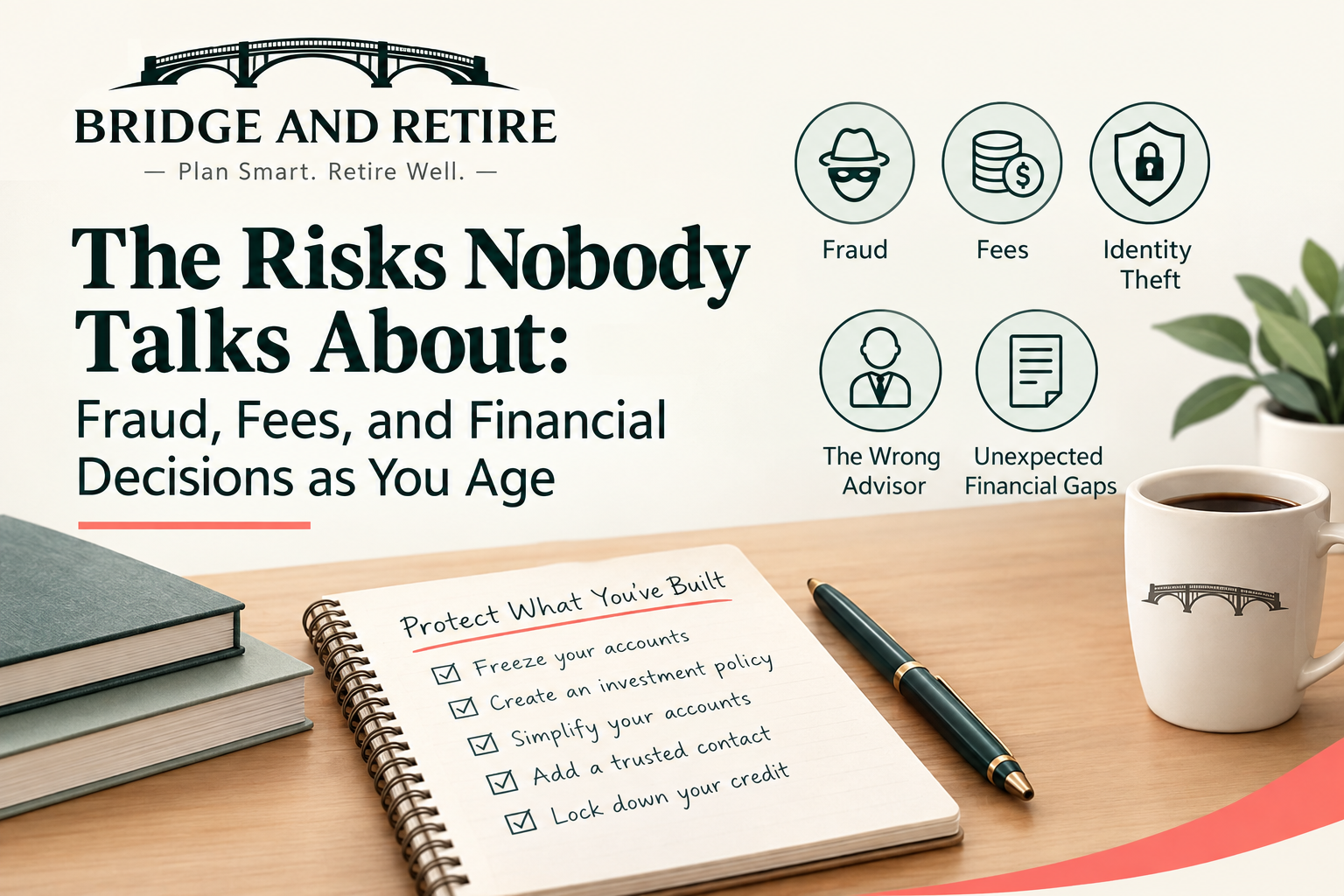
Practical Steps to Protect Yourself
The key to protect yourself is to take action while your judgment is sharp and you’ve got energy to put systems in place. Some keys steps are:
- Freeze your accounts against unauthorized transfers. Fidelity and Charles Schwab have offered a money transfer lockdown for years. Vanguard finally caught up with its Outgoing Transfer Lock. You simply have to log into your brokerage account, find the security settings, and turn this on. It blocks outside institutions from pulling your assets without you logging in first to disable the lock.
- Draft an Investment Policy Statement with a spousal hand-off plan. Your IPS is your playbook: target allocation, withdrawal rules, how you respond to a downturn. It should also include a spousal contingency section that spells out exactly what your spouse needs to know if you’re gone or incapacitated. It includes information like which custodian holds the assets, how to generate monthly cash flow, etc. Ideally it also includes contact information for a specific, pre-vetted fiduciary to call if they don’t want to manage things alone. That last piece is what keeps a grieving spouse from falling for the first high-pressure pitch that comes along.
- Simplify and consolidate accounts. Fewer accounts means fewer targets and less administrative overhead. That’s why it can be a goo idea to consolidate legacy accounts into one reputable custodian and keep your holdings in a simple, low-maintenance index fund portfolio.
- Add a Trusted Contact Person to your brokerage accounts. This doesn’t give anyone power of attorney or the ability to see balances or trade. It just gives the firm permission to reach out to someone you trust if they see unusual activity or can’t reach you.
- Lock down your credit and online accounts. Freeze your credit with Equifax, Experian, and TransUnion. It’s free and takes a few minutes. Turn on two-factor authentication everywhere using an authenticator app or a hardware key, not SMS.
Taking Control of Your Financial Defense
Streamlining your accounts, freezing unauthorized transfers, writing your IPS, and putting a real spousal backup plan in place shouldn’t be an afterthought. This is the work that keeps both of you in the driver’s seat for good.