

For most of us, filing a tax return is no longer the stressful, all-consuming chore it used to be. You collect your W-2s, answer a few questions in software, and hit submit. The real question, the one that can make a decade of difference, is what you choose to do with your income next.
Software can handle much of the mechanics. Programs like TurboTax can import documents, calculate credits, apply deductions, and file a return correctly for millions of taxpayers. For many middle-class households, the mechanics of tax preparation have largely been automated.
But software cannot answer a much more important question:
How much income should you choose to recognize over the next ten years?
That is where the real work is.
The Old Model of Tax Help
For a long time, tax help meant one thing: gather your documents, find every deduction you can, and make sure your return is accurate.
The focus was on compliance and minimizing this year’s tax bill.
That model made sense when tax strategy was mostly about things like:
- Itemizing deductions
- Tracking business expenses
- Avoiding calculation mistakes
- Making sure credits were applied correctly
In other words, the challenge was getting the return right.
Today, for many taxpayers, software can already do that part. The bigger opportunity now is tax planning.
Tax Planning Looks Forward
Tax preparation answers one question:
What do I owe this year?
Tax planning asks a different one:
What should my income look like over the next 10 or 20 years?
For people approaching retirement, that question becomes especially important.
Many retirees will have several different sources of income over time:
- Withdrawals from traditional retirement accounts
- Roth accounts
- Social Security
- Taxable investments
The order and timing of those income sources can have a meaningful impact on taxes.
Planning is not about finding deductions in April. It is about shaping income over time.
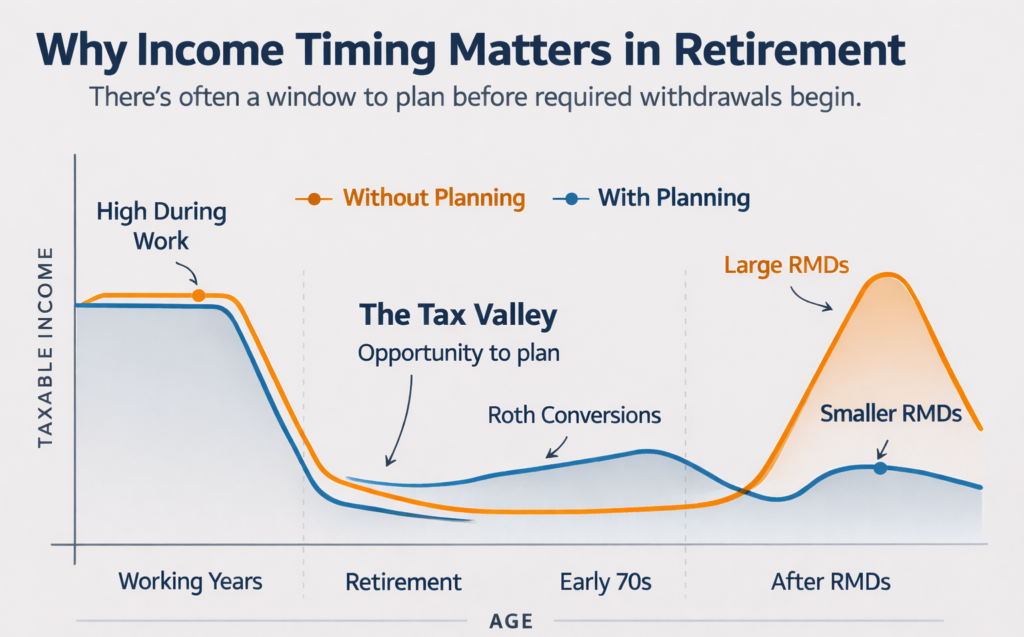
The Retirement Tax Valley
Many households experience something interesting when they retire.
Income drops when work stops, but required withdrawals from retirement accounts do not begin immediately.
Required minimum distributions generally begin in your early seventies, which means there is often a period between retirement and those required withdrawals where taxable income can be low.
Think of it as a tax valley.
Without planning, the income pattern can look like this:
- High income during working years
- Lower right after retirement
- A spike in income later when required minimum distributions begin
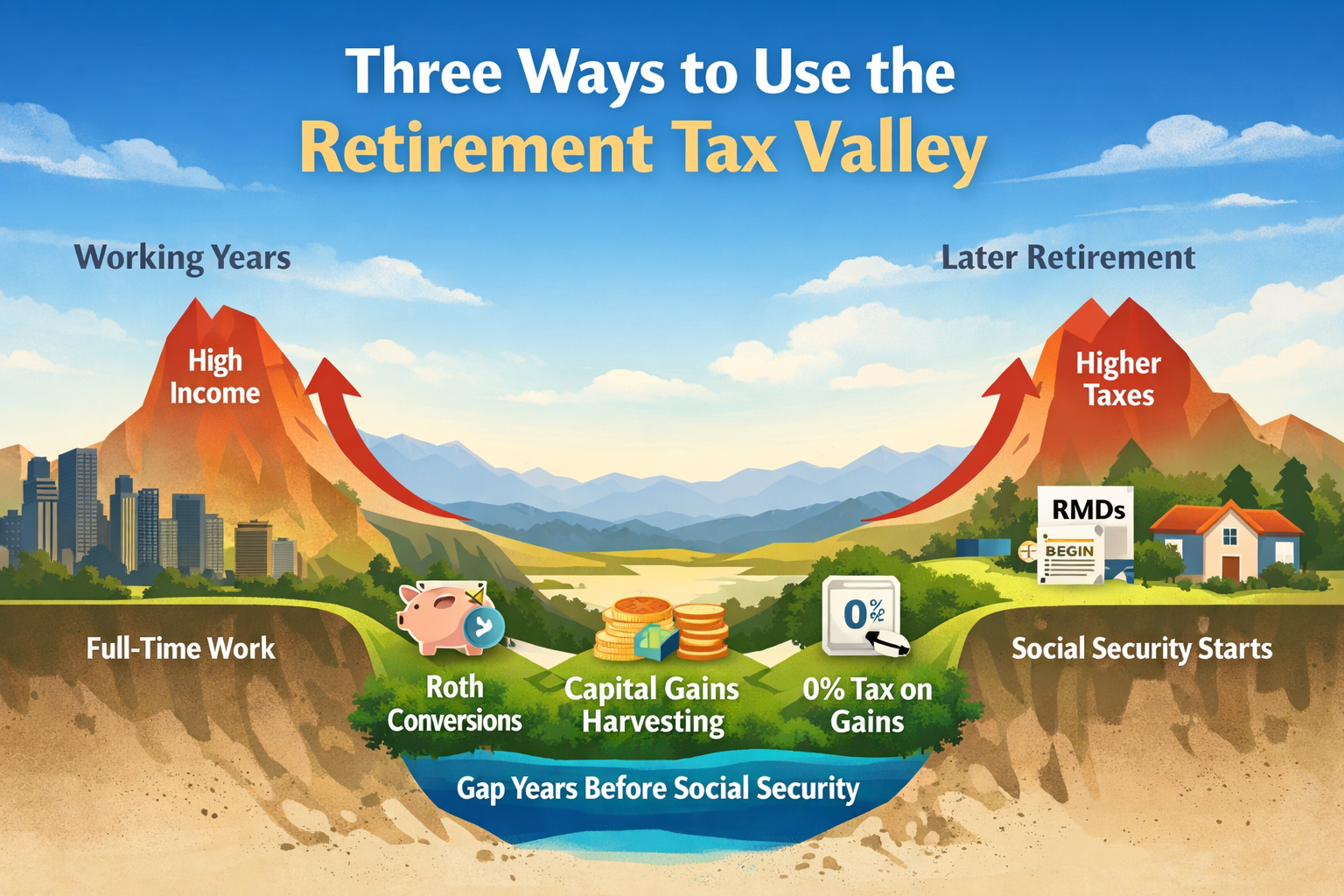
With planning, that valley can become an opportunity to recognize income at lower tax rates and smooth things out over time.
What Tax Planning Actually Looks Like
For many middle-class households, planning does not involve exotic strategies. It usually comes down to thoughtful decisions about when to take income.
Converting to Roth accounts during lower-income years
Some retirees convert a portion of their traditional IRA to a Roth IRA during early retirement. Convert enough each year to stay within a comfortable tax bracket. Over time, this reduces the size of required minimum distributions.
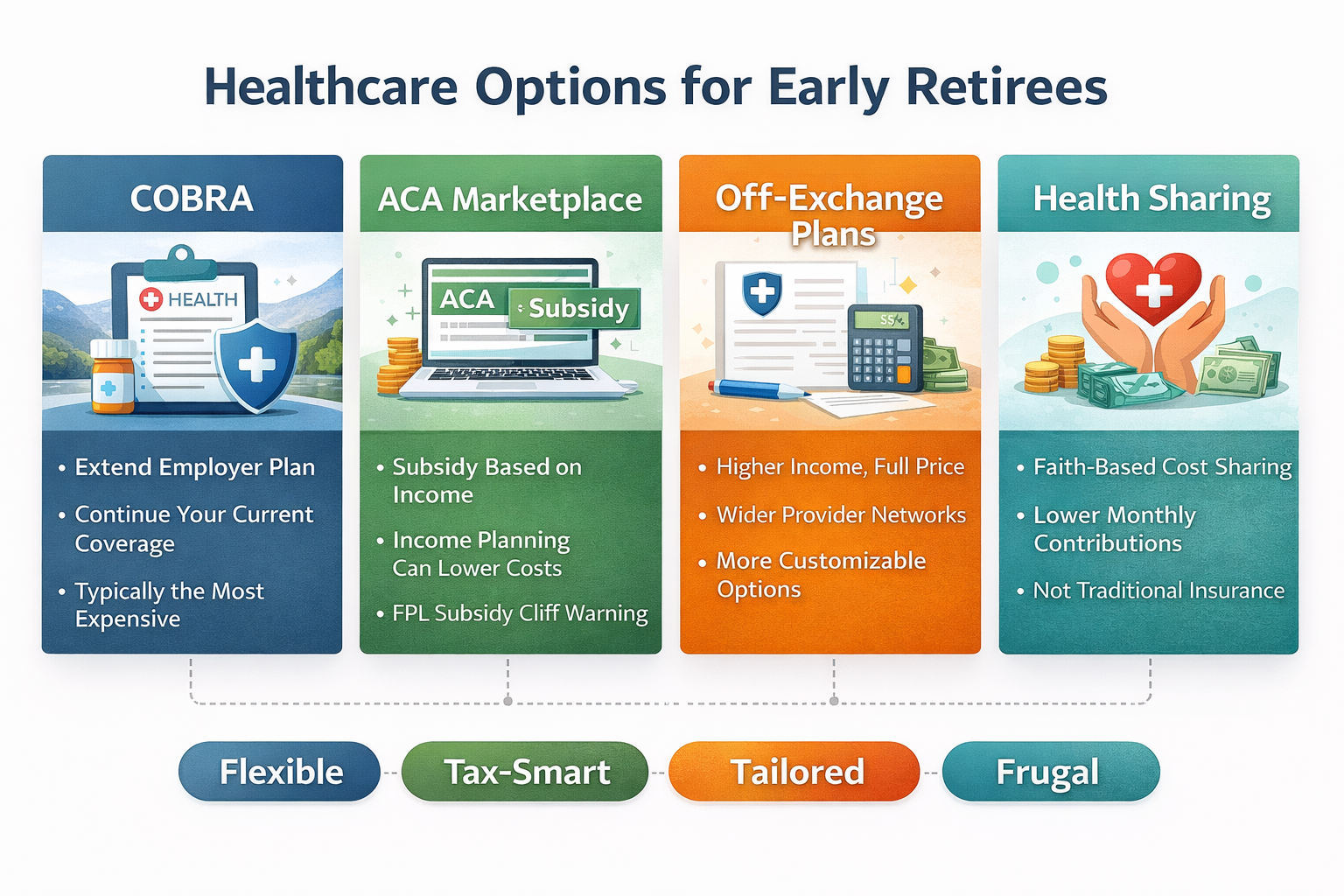
Managing income around Affordable Care Act subsidies
Households buying insurance through the exchange may qualify for premium tax credits under the Affordable Care Act. Those credits depend heavily on income. For example, if your income increases by $10,000 in a year, you could lose $3,000–$5,000 in premium subsidies. Careful planning around withdrawals and conversions can help households stay within important thresholds.
Harvesting capital gains in low-income years
When taxable income is relatively low, long-term capital gains can sometimes be taxed at zero percent. Selling appreciated investments during those years, realizing the gain, and reinvesting the proceeds can reset the cost basis and reduce future taxes.
Reducing future required minimum distributions
Households with large traditional retirement balances sometimes discover that required minimum distributions push income higher than expected later in retirement. Taking smaller withdrawals earlier, or converting some funds to Roth accounts, can reduce future spikes.
Why This Matters More Now
Tax laws change over time. Major legislation can shift tax brackets, deductions, and retirement rules. That uncertainty is one reason long-term tax planning matters. Planning is partly about recognizing that the tax environment may look different in ten years than it does today.
For most households, the tax return itself is no longer the complicated part. The return simply reports decisions that have already been made. The real question is what those decisions should be.
The Shift
The difference between preparation and planning is simple.
Tax preparation focuses on the past.
Tax planning focuses on the path ahead.
If you are within ten years of retirement, or already retired, your tax return may be less important than your tax trajectory.
Software can file your return.
But it will not decide how much income you should recognize this year to improve the next decade.
A tax return tells you what happened last year. Tax planning decides what your next ten years look like.

Pingback: Three Ways to Use the Retirement Tax Valley -