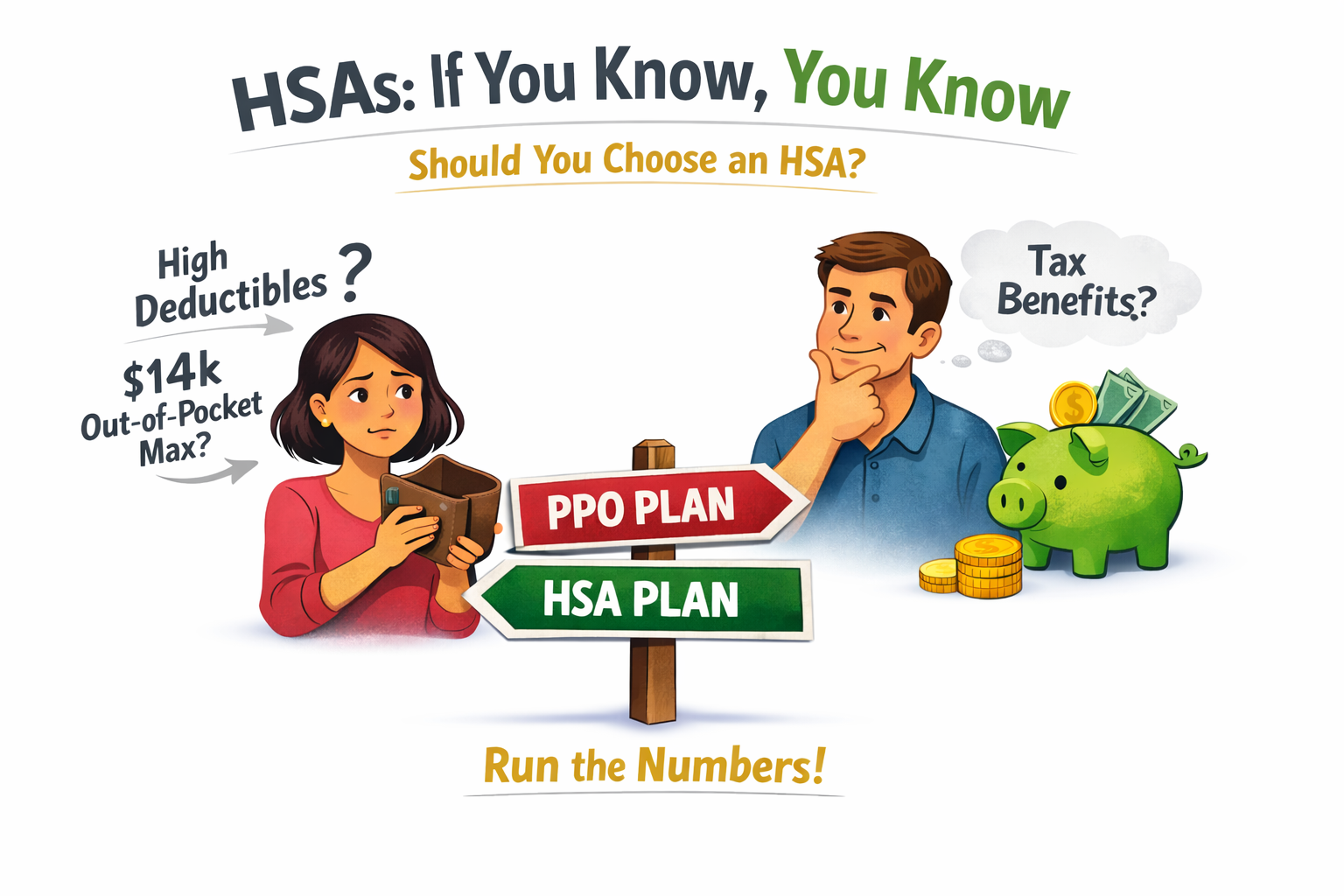

In my first post: HSAs: If You Know, You Know (Part I), I compared a High Deductible Health Plan (HDHP) with a traditional PPO and ran a breakeven analysis across different spending levels.
In that example, the HDHP was clearly superior, but that plan was particularly generous.
So what happens when the HDHP looks less compelling with no employer contribution, higher deductible, and only modest premium savings?
Let’s run the numbers again.
This example uses a real plan from Washington State’s School Employees Benefits Board (SEBB) program. For variety, I’m comparing individual coverage instead of household coverage.
| PPO Plan | HDHP / HSA Plan | |
| Monthly Premium | $47 | $37 |
| Annual Deductible | $750 | $1,700 |
| Coinsurance | 20% | 20% |
| Out-of-Pocket Max | $3,500 | $4,200 |
Unlike the Part I example, this employer does not contribute to the HSA.
However, in 2026 a single employee may contribute up to $4,400 to an HSA.
Assumptions Used in the Analysis
To keep this strictly a one-year breakeven comparison, I’m assuming:
- 24% marginal federal tax bracket
- 7.65% FICA tax
- No state income tax (Washington)
- Immediate tax deduction benefit included
- Long-term tax-free growth ignored
Total marginal tax benefit on HSA contributions:
24% + 7.65% = 31.65%
If a policyholder contributes the full $4,400, the immediate tax savings would be:
$4,400 × 31.65% = $1,393
This analysis assumes the individual has sufficient earned income to benefit from the full deduction.
Scenario 1: Low Spending Year ($500 in Expenses)
PPO
- $564 annual premium
- $500 expenses
Total cost: $1,064
HDHP
- $420 premium
- $500 expenses
- Plus $1,393 tax savings from HSA contribution
Net cost: $420 + $500 − $1,393 = -$473
RESULT
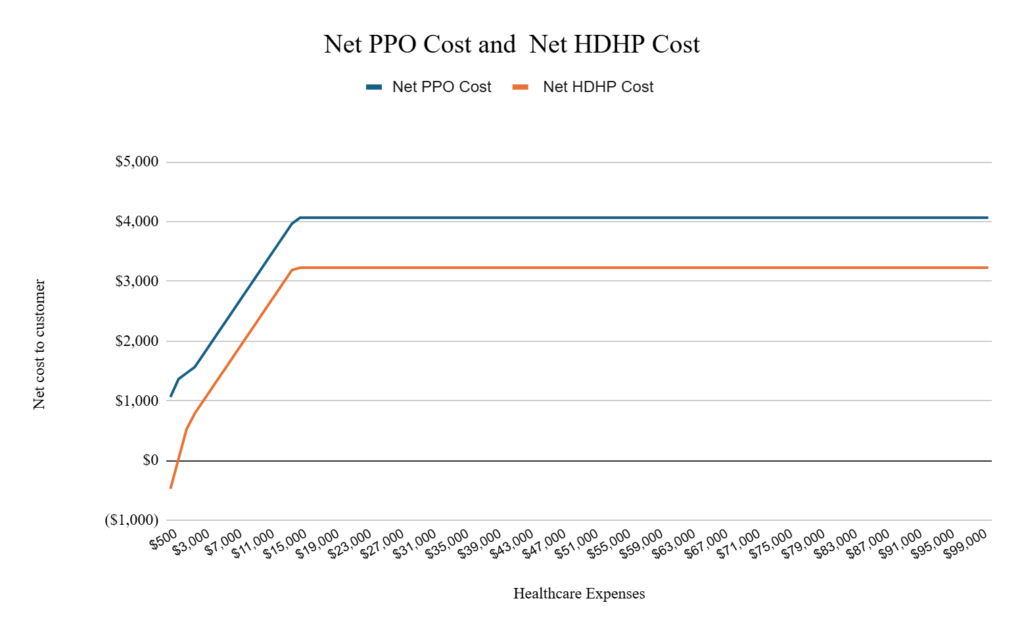
Even in a light spending year, the HDHP comes out ahead.That surprises many people. The deductible is higher, yet the tax arbitrage inside the HSA more than offsets it.
Scenario 2: High Spending Year ($20,000 in Expenses)
Now let’s assume a major medical year.
PPO
- $564 premium
- $3,500 out-of-pocket cap
Total cost: $4,064
HDHP
- $420 premium
- $4,200 out-of-pocket cap
- $1,393 tax savings
Total cost: $3,227
ResulT
Again, the HDHP comes out ahead— by $837
- The premium difference favors the HDHP
- The out-of-pocket maximum difference is relatively small
- The tax deduction is meaningful
If the policyholder maxes out the HSA contribution, the HDHP produces a better financial outcome at every spending level in this specific plan design.
That won’t always be true.
But in this case, there is no breakeven point — the HDHP dominates.
What If You Don’t Contribute to the HSA?
This is where it gets interesting.
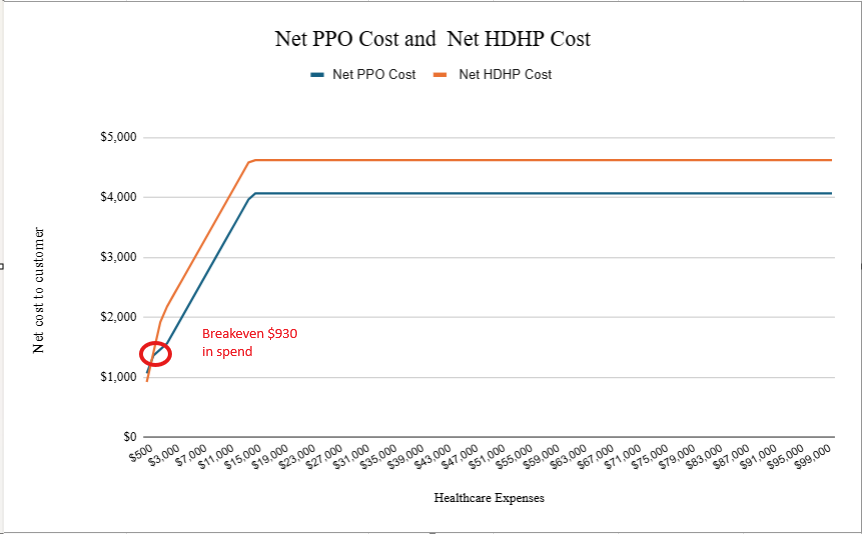
If you do not contribute to the HSA, and therefore receive no tax deduction, the breakeven point shifts. Without the tax benefit, the breakeven occurs at $930 in annual medical spending.
That insight matters.
Most consumers don’t run full tax-adjusted projections. They think:
“Will I spend about $1,000 this year?”
If they expect low expenses, they pick the cheaper premium plan.
But that ignores the tax arbitrage opportunity embedded inside the HSA.
For high savers — especially those pursuing financial independence or early retirement — the HSA isn’t just a health account. It can function as a stealth retirement account with triple tax advantages.
If you understand that, the decision framework changes.
You Can Run the Numbers Yourself
The examples above use real plan numbers, but your plan is different. Plug in your own details below to see where your breakeven falls.
Want more flexibility? Open the full-screen version of the calculator here.
If you’d prefer to save your inputs and run more scenarios you can download a version that includes the same calculations with a few extra variables to model here: Google Sheet (save a copy to edit)
Final Takeaway
Don’t choose a health plan based on deductible fear.
Run the math.
In many real-world cases — especially for high savers — the HSA plan isn’t just “good enough.”
It’s structurally superior.